Accelerated Bank Transfers
Run faster, lower-risk ACH on the rail you already use.
Every bank transfer carries a speed it can safely settle at. Astra finds it: transfers are analyzed before they move, then settled at the fastest speed each one can support, up to and including real time. Faster transfers, fewer returns, one integration.
- RTP
- FEDNOW
- SAME DAY ACH
- ACH


Every transfer earns its speed
Risk is what makes ACH slow, so Astra measures it per transfer. Speed stops being a policy you set once and becomes a decision made on every transfer.

Fewer returns to clean up
Identity, account ownership, institutional risk, available balance, and history are all checked before the transfer is created.

Real time on RTP and FedNow
Push transfers settle in seconds over RTP and FedNow, with Same Day ACH picked up automatically as the fallback, so the fast path is the default path.

Returns reported the moment they land
Returns arrive on your webhook with the return code attached, and if the debit comes back before the credit is created, Astra cancels the credit so nothing lands out of balance. Every return also appears in your ACH Return report in the Dashboard.
The delay in ACH is a fraud control. Astra replaces it with a better one.
Give the network a few days and there is time to catch a bad actor before the money is gone. That ACH timeline was designed to process paper checks. So teams protect themselves the only way a static policy allows: slow everything down and cap every transfer, because a small number of them might fail.
Astra decides per transfer instead. Verify the user, verify they own the accounts, weigh the institution, check the balance, read it against everything that user has done before, then pick the settlement speed least likely to end in a return. Screening per transfer, not a blanket delay.
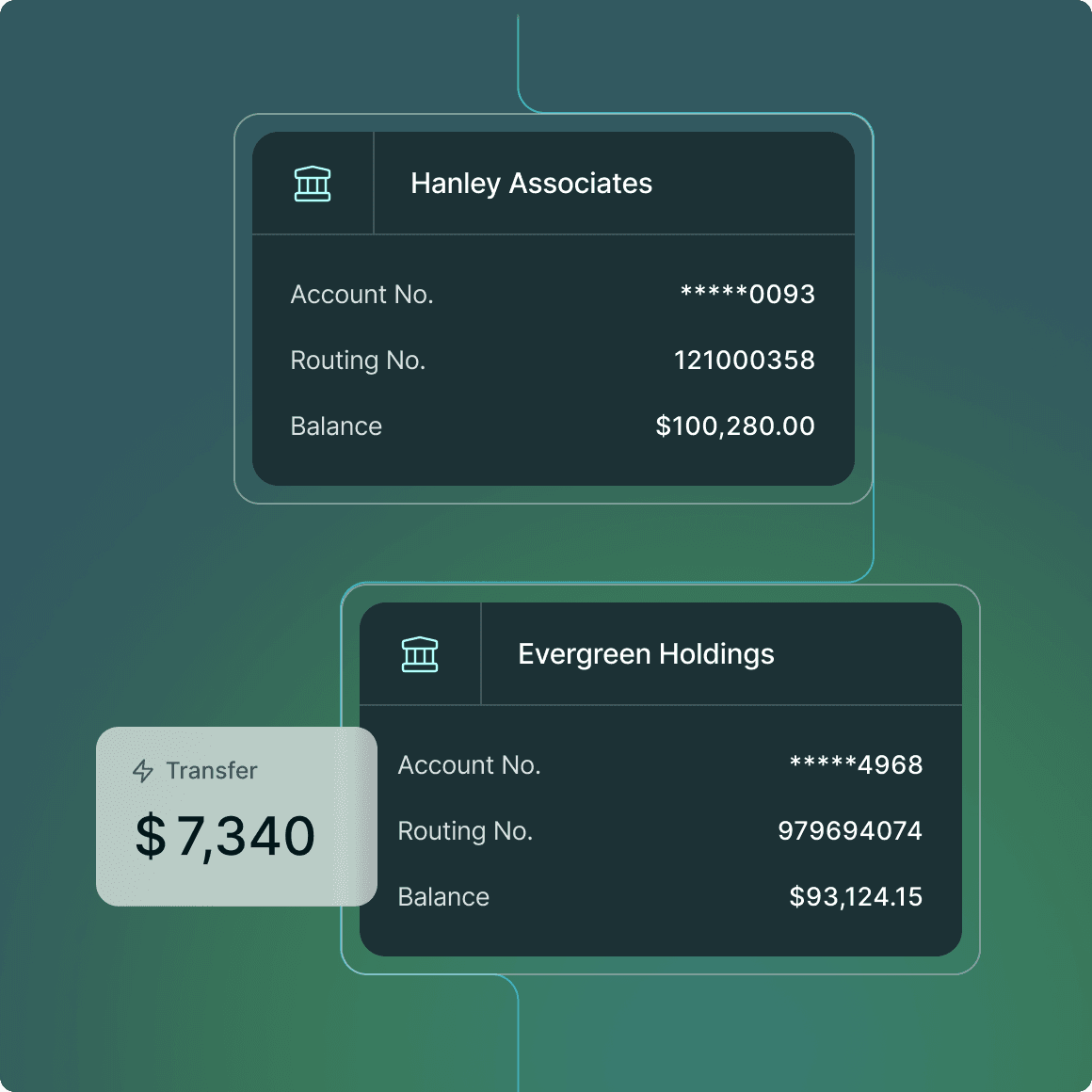
The best way to handle a return is to never send it.
When a transfer comes back, the money did not move. Somebody has to reverse it, tell the customer, and work out whether it was an empty account or something worse. Most teams defend against that by giving every transfer the slow speed and a low ceiling, which does not stop the bad ones. It just makes them fail later.
Screening before the transfer is created inverts that. Risky transfers are stopped up front, and everyone else stops paying for them.
5 signals
read on every transfer before it moves: identity, ownership, institution, balance, history
One speed and one ceiling for everybody, set to survive the riskiest transfer you might ever run. Your good customers wait so your worst one cannot hurt you.


Every transfer is evaluated across all five signals before it is created. Clean transfers get the fast speed. Risky ones do not go at all.
Connect once, screened on every transfer.

Connect the accounts
Add source and destination accounts to end user profiles through the bank linking integration you already run, or by routing and account number. Users give a one-time authorization that covers every transfer after it.
- Works with the integration you already have
- One authorization, then every future transfer
Request the speed
Ask for the fastest settlement and let the risk model decide what the transfer can actually support. One-time or recurring, across every supported transfer type.
- Sweeps, refills, and recurring routines are Dynamic Controls settings
- A new transfer flow is a setting, not a rebuild
Astra runs the transfer
Screening, balance checks, rail selection, settlement, and return reporting, with every status change and return code on your webhook.
- Returns reported with their code, not silently retried
- Your ops and support teams see the full lifecycle

Every transfer takes the fastest path it earns.
Prefer no fallback? Set the transfer to fail instead of stepping down, and handle it your way.
One webhook either way. Screening result, rail selected, settlement status, and any return all land in the same place.

The Payments Cloud
One product. The whole platform doing the work.
Accelerated Bank Transfers runs on the same four-layer platform as everything on Astra.
Smart Execution
Origination and settlement across RTP, FedNow, Same Day ACH, and standard ACH, on one core and one integration.
Dynamic Controls
Sweeps, refills, recurring routines, limits, and risk thresholds, all configured via API. KYC and KYB built in, or bring your own provider.
Intelligent Routing
Picks the rail and the settlement speed for every transfer from live risk signals, falls back automatically when an instant rail is unavailable, then reports which speed it chose.
Cloud Services
Return handling, reconciliation, reporting, disputes, and monitoring. The parts of an ACH program you would otherwise staff.
Results from teams building on Astra
Fold has moved hundreds of millions of dollars over Astra’s Accelerated ACH, and the screening does what this page says it does: nearly every transfer earns the fast speed.


For developers
Request a speed. Astra applies the optimal.
- Connect accounts through your existing integration, or by routing and account number
- One call creates the transfer, Astra scores it and selects the settlement speed
- Real time falls back to Same Day ACH automatically, or fails outright if you prefer
- Returns, recovery, and every status change land on your webhook
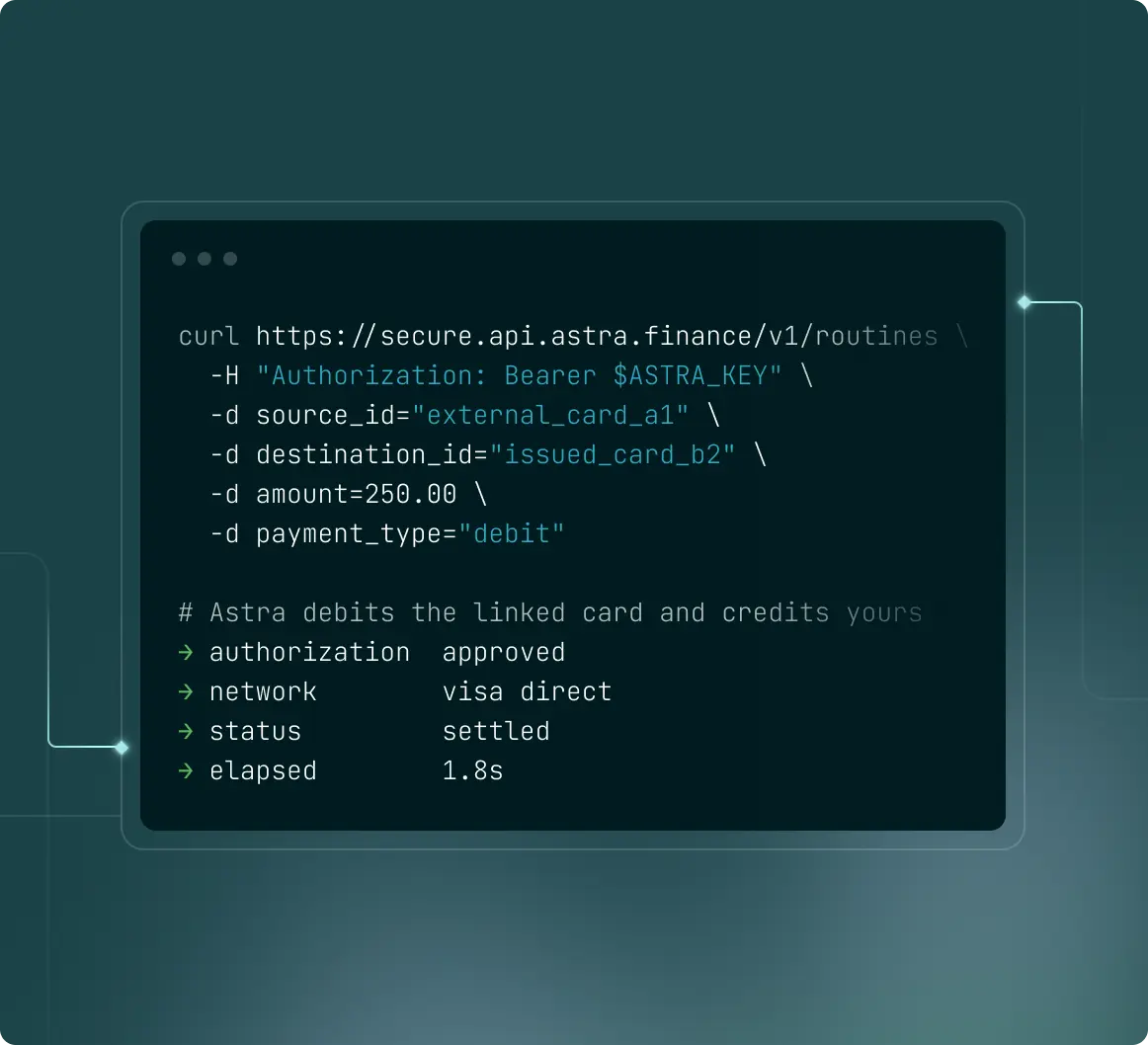
Three ways to move money. One integration.
Your team integrates once. Every payment type after that is a setting you turn on, not a new build.
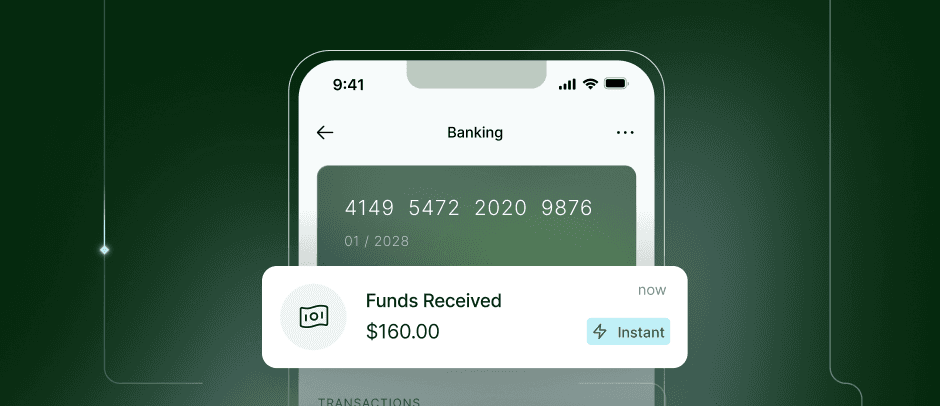
Push payouts to debit cards in seconds
Send funds to any US debit card over Visa Direct and Mastercard Move, with money available the moment it lands. Apply a transfer fee and payouts become a revenue line.

Fund accounts the moment users sign up
Pull money in instantly so the first deposit lands now, not in three to five business days. Activate users before the wait turns them into churn.